
Open-concept living removed walls but created a new design problem. Without doors and corridors to separate spaces, color must do the work of transition. Kitchen, dining, and living areas share sightlines, light, and often a single sweeping ceiling, and one poorly chosen shade can break the visual rhythm of the entire floor plan. Homeowners exploring Interior House Painting Services Putnam County, NY quickly discover that painting an open plan is less about picking a favorite color and more about engineering how colors relate. At Superior Painting & Home Improvement, we approach these homes as one continuous composition.
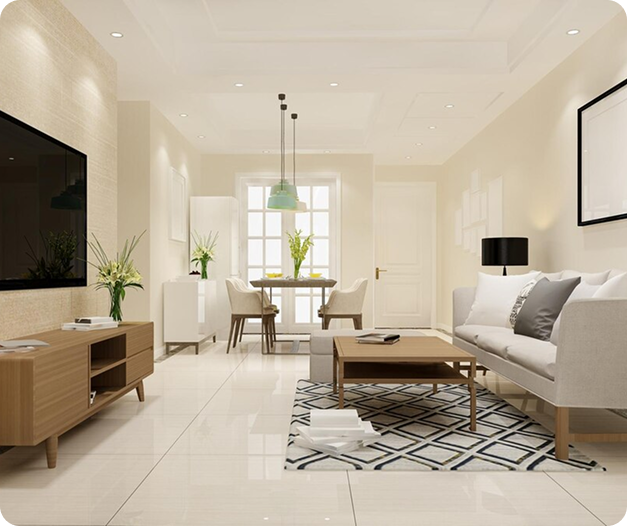
In a traditional layout, each room gets its own identity. In an open plan, you see multiple zones at once. The eye travels from the kitchen island to the dining table to the fireplace in a single glance, so abrupt color changes feel jarring while overly uniform color can feel flat.
The solution is a deliberate hierarchy. One anchor tone defines the overall mood, supporting tones define zones, and accent tones add personality in measured doses. Putnam County homes, with their lakeside cottages, wooded hillside contemporaries, and renovated farmhouses, benefit especially from this approach because the surrounding landscape provides a built-in color palette to echo indoors.
A cohesive palette is not a single color repeated everywhere. It is a family of colors that share an undertone.
When all the colors in an open plan lean the same way, whether warm, cool, or neutral, they read as harmonious even when their depth varies. A soft greige in the living area, a slightly deeper version near the dining space, and a muted sage in an adjoining nook can feel unified because they come from the same chromatic family.
Rather than switching hues across zones, adjust lightness and saturation. A gradient of related tones guides the eye gracefully through the space, creating subtle definition without drawing hard boundaries.
Color changes feel intentional when they occur at architectural breaks such as a structural column, a change in ceiling height, a fireplace chase, or a built-in cabinet run. These natural stopping points tell the eye the color shift is purposeful, not accidental. This is the core craft practiced by experienced Putnam County interior painters.
Where two colors meet on the same plane, precision becomes everything. An inside corner is the cleanest place for a color change, because the corner creates a natural shadow line. Stopping a color mid-wall draws attention to every wobble.
We plan transitions in advance, marking where each color begins and ends, then using precise cutting techniques and carefully applied masking to deliver razor-sharp edges. Low-tack masks are sealed at the edge so paint does not bleed beneath, producing a crisp line that looks drawn rather than painted. In open spaces with long, uninterrupted walls, consistent technique and consistent lighting during application prevent lap marks and sheen variations that become obvious once furniture is in place.
Soaring ceilings are among the most admired features of open-concept homes, and among the most demanding to paint.
Tall surfaces require engineered access, such as scaffolding or lifts, to maintain consistent technique from top to bottom. Working from stable platforms rather than improvised ladders protects both the crew and the finish.
Dark ceilings can feel dramatic and cozy but may shrink perceived height in spaces that are not generously proportioned. Light, ultra-flat ceilings amplify openness and minimize visible imperfections. In many Putnam County homes with exposed beams or angled planes, painting the ceiling a slightly deeper shade than the walls can add warmth while keeping the geometry legible.
Exposed timber, collar ties, and intersecting rooflines require careful sequencing. We prepare, prime, and finish each plane methodically, using masking to protect adjacent surfaces and ensuring the angles stay crisp where planes meet.
Masking is often treated as an afterthought, yet it determines whether a transition looks professional. In an open plan with built-ins, stone, exposed wood, and tall windows, the amount of protective work involved is considerable.
We seal edges against stone and wood, protect fixtures and glass, and sequence painting so that each surface is completed before adjacent ones are covered. Removing masking at the right moment, while paint is still workable rather than fully cured, prevents peeling at the edge and preserves the clean line. This discipline is invisible when done well, which is exactly the point.
Trim gives an open-concept space its structure. Baseboards, window casings, beams, and built-ins frame the visual field and offer an opportunity for refined contrast.
Crisp white trim against softly colored walls creates a classic, tailored look. For a more contemporary feel, trim painted in a tone slightly deeper than the walls, or even matching them in a different sheen, produces a quiet, enveloping effect. Where natural wood is retained, careful cleaning, sanding, and clear or tinted protective coatings preserve its character while ensuring consistency across the open floor plan.
The critical detail is continuity. Using the same trim treatment throughout the connected spaces keeps the architecture reading as one coherent whole, even when wall colors shift. For guidance on what to confirm before work begins, see our checklist of things to clarify before hiring painters.
Color is only half of continuity. Two walls in the same hue but different sheens can look like different colors under changing light. Maintaining consistent sheen across contiguous walls, with deliberate exceptions for trim and high-wear surfaces, keeps the space looking unified. We also keep batch consistency in mind so that large expanses of wall match from end to end.
Open plans leave nowhere to hide, and Putnam County interior painters must plan every edge in advance. Every lap, every edge, and every transition is visible from several vantage points. Superior Painting & Home Improvement brings the precision this demands: planned transitions, disciplined masking, safe access for tall spaces, and finishes inspected under the lighting each room will actually receive.
Browse our Putnam County interior painting page for more detail, or view examples in our project portfolio.
Start with one anchor color, then select supporting tones that share its undertone and vary only in depth. Use architectural features as natural transition points between colors.
Ideally at an inside corner or architectural break such as a column or built-in. These locations create natural shadow lines that make the transition look intentional.
With stable, engineered access such as scaffolding or lifts, which allow consistent technique and protect both the crew and the finish.
Generally, yes. Consistent trim color and sheen create continuity, letting wall colors change without fragmenting the space.
Yes. Different sheens reflect light differently, so maintaining consistent sheen across connected walls keeps colors reading as unified.