
Hudson Valley siding rarely fails because of one bad storm. It fails when water enters the wall, freezes, expands, and repeats that cycle until the paint film lets go. Finding the right Exterior Painters Dutchess County, NY homeowners can trust means choosing a crew that treats paint as a moisture-management system, not a color change. At Superior Painting & Home Improvement, every exterior project begins with the substrate: what it holds, how it breathes, and how it behaves when temperatures swing below freezing and back again.
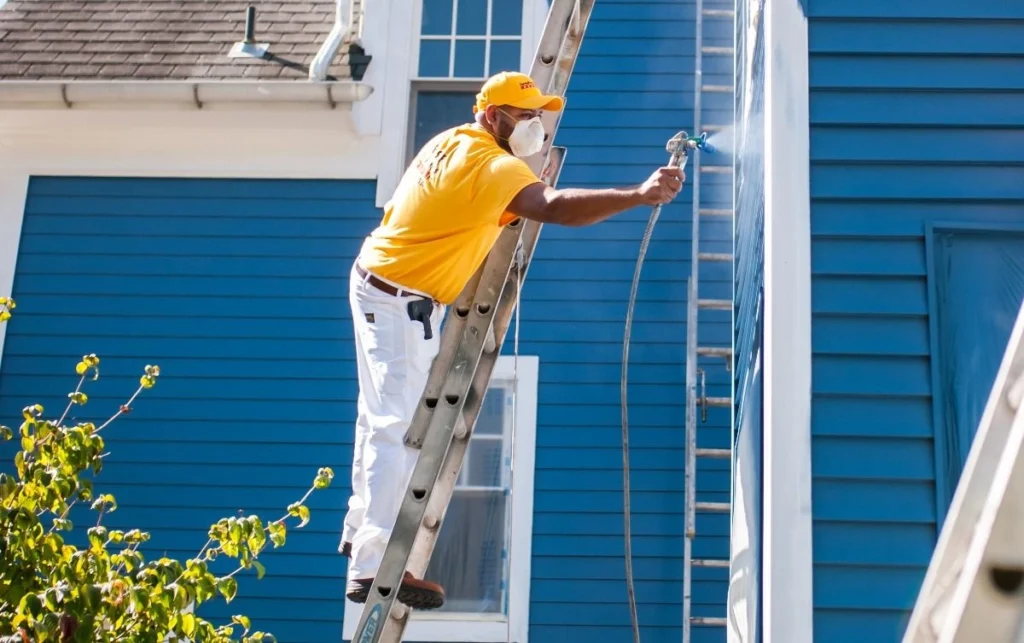
Homes from Poughkeepsie to Rhinebeck and Millbrook sit in a climate that punishes coatings. Cold nights, bright winter sun on south-facing walls, wind-driven rain, and humid summers create constant expansion and contraction in wood, fiber cement, and composite trim.
When water gets behind a coating through a failed caulk joint, an unprimed end grain, or a hairline crack, it has to go somewhere. In freezing conditions it turns to ice and expands, pushing the paint film away from the surface. That is why peeling often starts at window corners, butt joints, and the lower edge of clapboards, where water collects.
Air temperature alone does not tell you whether a coating will bond. A surface that is close to the dew point holds a thin layer of condensation that interferes with adhesion. Skilled exterior painting services Dutchess County, NY crews measure surface temperature and dew point and follow the manufacturer’s stated application limits instead of painting whenever the weather looks acceptable. This is a technical step that separates a durable finish from one that fails early.
Wood siding and trim should be dry enough to hold primer. A pin-style moisture meter shows whether boards are still carrying water from a leak, a gutter overflow, or soil contact. A common industry guideline is to coat wood only when its moisture reading is in the mid-teens or lower. Boards that read high point to an active water source, and painting over them hides the problem for a short while and then amplifies it.
The way an old coating fails tells you what is wrong underneath:
Identifying the pattern lets the crew correct the cause, not just repaint the symptom.

High-pressure water is often misused. Excess force drives water behind lap siding and etches soft cedar. Careful exterior painters use controlled-pressure washing combined with a detergent and a mildewcide-based cleaner, then rinse thoroughly and allow the substrate to dry before any coating goes on.
After cleaning, the surface is profiled by hand: loose paint is scraped back to a sound edge, rough transitions are feathered so they do not telegraph through the topcoat, and bare wood is spot-primed with a penetrating, stain-blocking primer. Cedar and redwood contain tannins that bleed through standard primers, so a tannin-blocking primer is essential on these species. This step of substrate priming is where much of a coating’s real strength comes from, long before the color is applied.
Resin choice is not a branding decision. It is a physics decision.
Premium 100% acrylic latex stays flexible as boards move, resists UV degradation, and allows water vapor to pass outward through the film. That vapor permeability matters on wood siding, because it lets the wall dry instead of locking moisture inside.
Elastomeric coatings are thick, stretchable films that bridge hairline cracks. They perform well on stucco, concrete block, and masonry that cracks as it moves. On wood siding, however, a heavy film with low permeability can trap vapor and encourage failure. A responsible contractor matches the coating to the substrate instead of selling one product for everything.
This is also where an honest evaluation separates quality providers from those who treat every house the same. If you want to see how coating selection fits a complete scope of work, our exterior painting services in Dutchess County page outlines the surfaces we handle across the region.
Most water intrusion happens at joints, not on open siding. Window and door perimeters, corner boards, fascia, and trim returns are the most exposed areas, and they are where failed sealant lets water in.
Professional crews remove brittle, cracked caulk instead of layering new sealant over it. They install backer material where joint depth requires it, then apply a high-quality, paintable elastomeric sealant that can stretch with seasonal movement. The sealant is tooled so water sheds away from the joint instead of pooling in it. Exposed end grain on trim boards receives extra primer, because cut ends absorb water faster than faces.
These are the details homeowners cannot see once the job is finished, yet they decide whether the finished coating stays intact around the most vulnerable parts of the house.
Horizontal wood surfaces take the worst punishment because water sits on them and sunlight hits them directly. Decks, railings, and porch steps need a different approach from vertical siding.
The work includes cleaning to remove gray, weathered fibers, neutralizing cleaners so the finish can bond, and selecting a penetrating or film-forming protector based on whether the owner wants the grain visible or covered. UV-resistant pigments are especially important here, since clear finishes with no UV protection break down quickly under direct sun. Railings and balusters get careful end-grain sealing where they meet the deck surface.
Exterior color is also a performance decision. Dark colors absorb more heat, which increases expansion and fade, so modern formulations use heat-reflective pigments that keep deep tones more stable. Current popular palettes for Dutchess County homes include muted forest greens, warm greige, charcoal with crisp white trim, and black window sashes against natural stone or board-and-batten siding.
Colonial, farmhouse, Victorian, and contemporary homes each carry architectural cues. A capable crew considers roofline, stonework, landscaping, and the neighbor’s palette so the final look feels intentional, not generic.
When comparing providers, ask questions that reveal technical depth:
A contractor who answers these clearly is one who understands the building science behind exterior painting. You can see examples of finished work in our project portfolio, and review the full scope of work on our exterior painting services page.
The Hudson Valley’s freeze-thaw cycles, humidity swings, and wind-driven rain put unusual stress on coatings. Local painters who understand this focus on moisture testing, breathable resins, and joint sealing so the finish withstands repeated expansion and contraction.
No. Elastomeric coatings suit stucco, masonry, and cracked surfaces, but their low vapor permeability can trap moisture behind wood siding. A 100% acrylic latex system is often the better match for wood and fiber cement.
Windows are where failed caulk, exposed end grain, and water-shedding problems combine. Water enters at these joints, freezes, and pushes the paint film outward before it affects open siding.
Paint cannot repair rot. Damaged wood must be cut out and replaced or properly restored before priming. Painting over soft, decayed wood only hides the damage while it continues to spread.
The surface should be clean, sound, and dry, with failed paint removed and bare areas primed. A moisture reading and a visual inspection confirm readiness before any topcoat is applied.